
Soft Fruit Jobs UK: What Employers Need
By Talent Agri ·
A clear guide to soft fruit jobs UK employers need to fill, the skills that matter, and how candidates can find stable, well-matched roles.
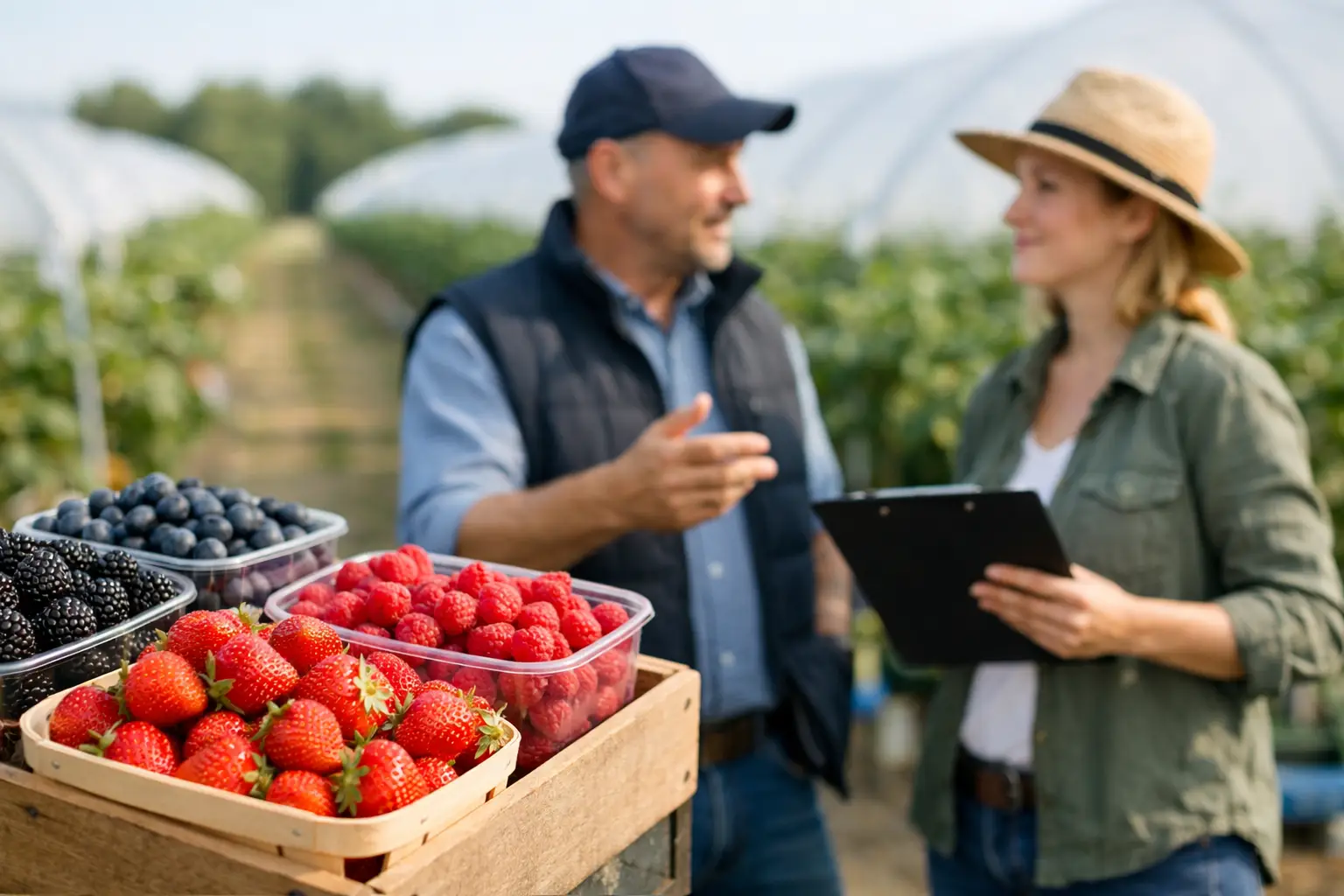
When a soft fruit business is short of the right people, the impact shows quickly. Harvest windows do not wait, fruit quality can turn fast, and pressure moves from the field to the packhouse in a matter of hours. That is why soft fruit jobs UK employers need to fill are not simply about headcount. They are about securing people who can protect output, quality and continuity.
Visit the agricultural jobs page to check current listings. The roles discussed here explain the sector and do not imply that each vacancy is currently available.
In soft fruit production, recruitment tends to be judged by timing first and quality second, but the strongest businesses know both matter. A rushed hire may cover an immediate gap, yet if that person cannot work safely, manage pace, or fit the demands of the operation, the cost soon surfaces elsewhere. For employers and candidates alike, a better result comes from understanding what these roles really involve and where the market is tightening.
Why soft fruit jobs UK businesses advertise are changing
Soft fruit recruitment in the UK is no longer limited to a narrow view of seasonal picking. That remains a major part of the workforce requirement, but the sector now relies on a broader mix of skills across crop management, irrigation, quality control, packhouse leadership, technical compliance and site operations. As production systems become more sophisticated, employers are looking for people who can do more than follow routine. They need individuals who can respond to weather, maintain standards and work effectively in fast-moving teams.
That shift matters because hiring challenges are different at each level. Entry-level and seasonal roles often depend on reliability, stamina and speed to competence. Supervisor and specialist positions depend more on judgement, communication and previous horticultural experience. Senior hires carry another set of demands around planning, labour management and commercial awareness. Treating all soft fruit vacancies as broadly interchangeable is one of the reasons recruitment can become inefficient.
For candidates, this changing picture creates more room for progression than the sector sometimes gets credit for. Someone who begins in field operations may develop into team leadership, irrigation support, crop supervision or packhouse management, provided the business has the structure and standards to support that path.
The roles that matter most in soft fruit production
Soft fruit employers often recruit around pressure points in the season, but the most commercially important roles are not always the most visible. Pickers and general operatives are essential because they directly influence harvest pace and yield recovery. Without enough capable labour in place, fruit can be lost before it reaches the customer. Yet there is usually equal pressure on supervisors who keep teams organised, monitor output and maintain consistency across rows, tunnels or growing areas.
Packhouse roles are another common source of strain. Graders, line leaders, quality controllers and packhouse managers sit close to the point where product value is protected or reduced. A good packhouse team keeps throughput moving and standards intact. A weak one can create bottlenecks, waste and customer issues very quickly.
Then there are specialist roles that are harder to replace at short notice. Irrigation technicians, spray operators, crop technicians and farm supervisors often hold practical knowledge that keeps the entire operation stable. These are not positions where employers can afford poor fit. Technical competence matters, but so does the ability to work within the systems and culture of the business.
What employers should look for beyond availability
In a tight market, it is understandable that employers focus first on who is available and when they can start. But availability on its own rarely leads to a strong placement. In soft fruit, the better question is whether a person can perform under the specific conditions of that site.
That means looking at the detail. Has the candidate worked in similar crops or systems? Can they handle the physical pace of the role? Do they understand the discipline required around hygiene, food safety and product handling? If the job involves managing others, can they communicate clearly and maintain standards under pressure?
It also helps to be realistic about what can be trained and what cannot. Practical processes can often be taught if the individual has the right attitude and work ethic. Consistency, resilience and accountability are harder to build from scratch. For more senior appointments, cultural fit becomes even more significant. A technically strong candidate who cannot align with the management style or pace of the business may still prove the wrong hire.
This is where a precision-led recruitment approach has value. It reduces the temptation to appoint quickly without properly testing whether the person fits the demands of the role.
What candidates should know before applying
For job seekers, soft fruit roles can offer a solid route into well-run fresh produce businesses, but expectations need to be clear from the outset. These are often physically demanding environments where timing, consistency and teamwork matter every day. The strongest candidates are usually those who understand that output and quality sit side by side. Speed is useful, but not if standards fall.
Candidates should also think beyond job titles. A role labelled as supervisor may vary widely between one farm and another. On one site it might involve hands-on team coordination. On another it could include training, rota planning, yield reporting and liaison with management. Asking the right questions early can prevent a poor move.
Previous experience in horticulture is valuable, but transferable experience can matter too. Candidates from packhouse, food production, nursery, field vegetable or other agricultural environments may bring relevant strengths, especially where there is familiarity with pace, compliance and operational discipline.
For experienced professionals, progression often comes from joining a business that takes structure seriously. Clear reporting lines, competent management and realistic expectations tend to produce better long-term outcomes than a role that looks attractive on paper but lacks operational support.
Where recruitment often goes wrong
The biggest hiring mistakes in soft fruit usually come from mismatch rather than shortage alone. Employers may overstate the simplicity of a role, then struggle with retention when the reality becomes clear. Candidates may accept a position based on pay or timing without fully understanding hours, accommodation arrangements, team structure or production pressure.
There is also a tendency in some parts of the market to prioritise volume over suitability. That can create unnecessary churn, particularly in key supervisory or specialist roles. A faster shortlist is not always the same as a better one. In soft fruit operations, every failed hire carries a direct operational cost.
Compliance is another area where shortcuts create risk. Right to work checks, clear contracts, accurate job descriptions and proper onboarding are not administrative extras. They are part of building a stable workforce and protecting the business.
Why specialist recruitment makes a difference
Generalist hiring support can fill vacancies, but soft fruit businesses often need more than a basic CV-matching exercise. They need someone who understands crop cycles, labour pinch points, packhouse pressures and the difference between a candidate who looks suitable and one who will genuinely deliver.
That specialist perspective is especially useful when hiring for roles where poor fit is expensive. A farm supervisor, irrigation specialist or packhouse manager needs to bring the right technical grounding, but also the ability to operate within the culture and commercial pace of the business. A trusted partner should be testing for both.
For candidates, specialist recruitment can also improve the quality of opportunities put forward. Rather than being pushed towards generic agricultural roles, they are more likely to be matched with businesses where their background makes sense and where the next step is credible. That is the difference between finding any job and finding a role that supports progression.
Talent Agri works in that space by focusing on sector fit, careful vetting and long-term value rather than high-volume submission.
Building better outcomes in soft fruit jobs UK
The soft fruit sector will continue to depend on good people at every level, from field and packhouse operatives through to technically skilled and management hires. The challenge is not simply attracting labour. It is making better decisions about who is right for the business, who is ready for progression and where recruitment quality directly supports commercial performance.
For employers, that means defining roles properly, hiring with precision and being honest about the demands of the operation. For candidates, it means looking closely at the business behind the vacancy, not just the title or pay rate. The best appointments usually happen when both sides are clear about expectations from the start.
In a sector where timing is critical and standards are non-negotiable, the right hire does more than fill a gap. They help keep the season on track.
Talk to Talent Agri
Discuss your hiring needs with our agricultural recruitment team, or explore the current vacancy board if you are looking for your next role.