Irrigation Specialist Jobs in UK Agriculture
By Talent Agri ·
Explore irrigation specialist jobs in UK agriculture, from key skills and duties to hiring priorities, pay factors and long-term career prospects.
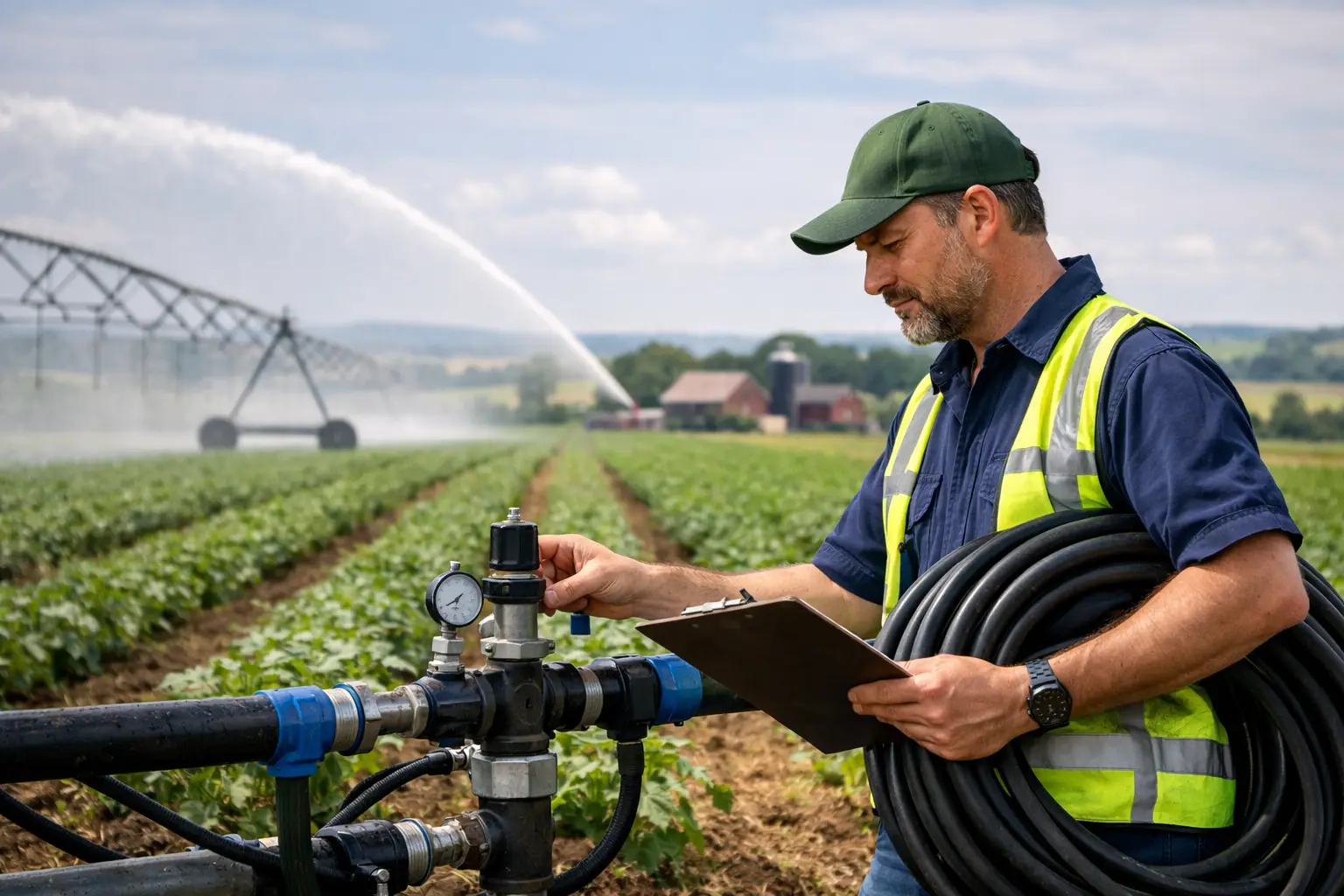
When irrigation fails in the middle of a dry spell, the cost shows up quickly - stressed crops, uneven growth, missed quality targets and pressure across the whole operation. That is why irrigation specialist jobs matter so much in modern horticulture and fresh produce. These are not simply maintenance roles. They sit close to yield, crop quality, labour efficiency and commercial performance.
Looking for a role? Check our agricultural jobs page for access to current listings. This guide describes the occupation; it is not a live irrigation vacancy.
For growers, an irrigation specialist can be the difference between a system that just about functions and one that actively supports output. For candidates, it is a technical career path with real value in a market that increasingly depends on precision, resource control and dependable operational delivery. In both cases, the detail matters.
What irrigation specialist jobs involve
Irrigation specialist jobs usually combine practical system management with technical problem-solving. In a soft fruit, top fruit or protected cropping environment, the role often covers the day-to-day running of irrigation infrastructure, from pumps and filters to valves, pipework, dosing equipment and control systems. In some businesses, the position also includes fertigation, water quality checks and drainage oversight.
The exact scope depends on the size and complexity of the site. On a smaller farm, one person may oversee the full system and carry out hands-on repairs. On a larger fresh produce business, the role may sit within a wider technical or operations team, with more focus on monitoring, calibration, scheduling and data-led decision-making.
Either way, the core responsibility is consistent. The irrigation specialist must help ensure that crops receive the right amount of water, at the right time, through a system that is reliable, efficient and safe.
Why these roles are becoming more critical
Water management has moved well beyond a seasonal practical task. In many UK growing businesses, it is now a strategic issue shaped by input costs, environmental compliance, weather volatility and crop specification. Irrigation is no longer just about keeping crops alive. It is about protecting margin and meeting commercial expectations.
This shift has changed the profile of the role. Employers increasingly want people who can combine engineering awareness with crop understanding. A candidate who can replace a faulty component is useful. A candidate who can also identify why pressure is inconsistent across zones, spot the effect on crop performance and adjust accordingly brings wider value.
That is especially true in high-value sectors where consistency drives return. Soft fruit, salad, nursery and glasshouse operations tend to place particular weight on irrigation performance because small errors can have fast and visible consequences. In these environments, a strong irrigation specialist supports more than infrastructure. They support production confidence.
Skills employers look for in irrigation specialist jobs
Most employers are not only hiring for technical competence. They are hiring for dependability, judgement and the ability to work effectively in a live production setting.
Practical experience with irrigation systems is the starting point. That may include pumps, filtration systems, pressure control, pipe installation, emitters, booms, tanks, sensors and automated controllers. Familiarity with fertigation units and mixing systems is often valuable, particularly in fresh produce businesses where feeding and watering decisions are closely linked.
Beyond the equipment itself, employers usually look for people who can diagnose faults without creating unnecessary delay. The best candidates are methodical. They understand how one issue can affect another part of the system and they do not rush to fix symptoms while missing the root cause.
Communication also matters more than some expect. Irrigation specialists often work across growing, maintenance and operations teams. If a system issue is likely to affect crop timing or labour planning, that information needs to be passed on clearly and quickly. Technical knowledge is important, but so is the ability to work in step with the wider business.
The difference between a good candidate and a strong hire
On paper, many applicants can appear similar. They may have worked with pumps, carried out repairs or supported irrigation schedules. The stronger hire is usually the person who understands the commercial and seasonal reality behind the job.
In practice, that means recognising when a problem needs an immediate temporary fix to protect production and when it needs a more considered long-term solution. It means taking ownership of preventative maintenance rather than waiting for breakdowns. It also means being comfortable in businesses where priorities shift quickly during peak periods.
For employers, this is where specialist recruitment adds value. Irrigation specialist jobs require more than a generic maintenance background. The strongest candidates tend to come from relevant agricultural or horticultural settings where timing, crop sensitivity and operational pressure are already familiar.
Career routes for candidates
For candidates already working in agriculture, irrigation can offer a credible route into a more specialist position. Some move into the role from general farm maintenance, packhouse engineering or growing support positions. Others start in hands-on field or glasshouse work and build technical expertise over time.
Progression depends on the type of business. In some settings, an irrigation specialist may develop into a senior technical support role with wider responsibility for environmental systems, water strategy or site services. In other businesses, the progression path may lead towards irrigation management, facilities oversight or broader operations roles.
There is no single route, which is part of the appeal. A practical candidate with good fault-finding ability can build a strong career here, particularly if they are willing to learn control systems, record-keeping requirements and the crop-side impact of irrigation decisions.
What affects salary and hiring competition
Pay for irrigation specialist jobs varies with experience, responsibility, business scale and location. A role focused mainly on maintenance support will sit differently to one involving full system management, fertigation control and technical reporting. Seasonal intensity also plays a part. In businesses where irrigation performance is central to crop success for long periods of the year, employers may need to offer more to secure the right person.
The market can be competitive because the skill set is not easy to replace. Candidates with relevant sector experience often receive interest from multiple employers, especially where growers need someone who can start with minimal supervision. That can create tension between budget and urgency.
There is a trade-off here. Hiring quickly to fill a gap may solve an immediate issue, but if the person lacks the right technical base or sector fit, the business may still face costly inefficiencies later. Taking a more precise approach tends to lead to better long-term value.
What candidates should look for before applying
Not every irrigation role offers the same level of support, development or operational clarity. Candidates should look closely at how the business is set up. Is irrigation treated as a core function or as an add-on to general maintenance? Is there investment in the system, or is the role likely to be spent firefighting ageing infrastructure with limited backing?
It also helps to understand reporting lines and expectations. Some roles are highly autonomous, which suits experienced specialists. Others are better for candidates looking to build experience within a structured team. Neither is automatically better. It depends on the stage of your career and how much responsibility you want to take on straight away.
A well-briefed role should make clear what equipment is on site, what level of technical responsibility is expected and how success will be measured. If those details are vague, it is worth asking more questions.
Hiring well for irrigation specialist jobs
For employers, clarity at the hiring stage makes a significant difference. If the role includes fertigation management, compliance checks, scheduling input or team coordination, that needs to be defined early. Too many vacancies are written as broad maintenance positions when the real requirement is much more specialist.
That lack of precision narrows the quality of applications. Strong candidates want to understand the challenge, the systems they will work with and the support around them. They are less likely to engage with adverts that feel generic or underspecified.
This is also a market where cultural fit has practical value. An irrigation specialist working in a fast-moving fresh produce business must be able to operate calmly under pressure, communicate with confidence and take a disciplined approach to routine tasks. Technical ability is vital, but it is rarely the whole hiring decision.
For that reason, many employers benefit from working with a specialist recruiter who understands the sector rather than relying on broad candidate volume. Talent Agri sees this regularly across agricultural and horticultural hiring - the better outcome usually comes from careful matching, not the largest shortlist.
Why the role has long-term relevance
Irrigation specialist jobs are likely to remain important as UK growers place greater focus on efficiency, resilience and input control. Weather patterns are less predictable, resource scrutiny is higher and production businesses need people who can keep systems performing without waste.
That does not mean every role will look the same in five years. Some will become more data-led. Others will stay heavily practical. In larger businesses, the job may become more specialised. In smaller ones, versatility will remain essential. But the demand for people who understand both the mechanics and the consequences of irrigation decisions is unlikely to fade.
For candidates, that creates a solid opportunity to build a career with genuine technical value. For employers, it underlines the need to hire with care. The right person does more than keep water moving. They help create the consistency that successful crop production depends on.
If you are hiring or considering your next move, it is worth treating this role with the level of attention it deserves - because in the right business, a capable irrigation specialist supports far more than the system itself.
Talk to Talent Agri
Discuss your hiring needs with our agricultural recruitment team, or explore the current vacancy board if you are looking for your next role.