How to Fill Farm Vacancies Properly
By Talent Agri ·
Learn how to fill farm vacancies with the right people, faster. Practical hiring advice for UK farms, produce businesses and livestock employers.
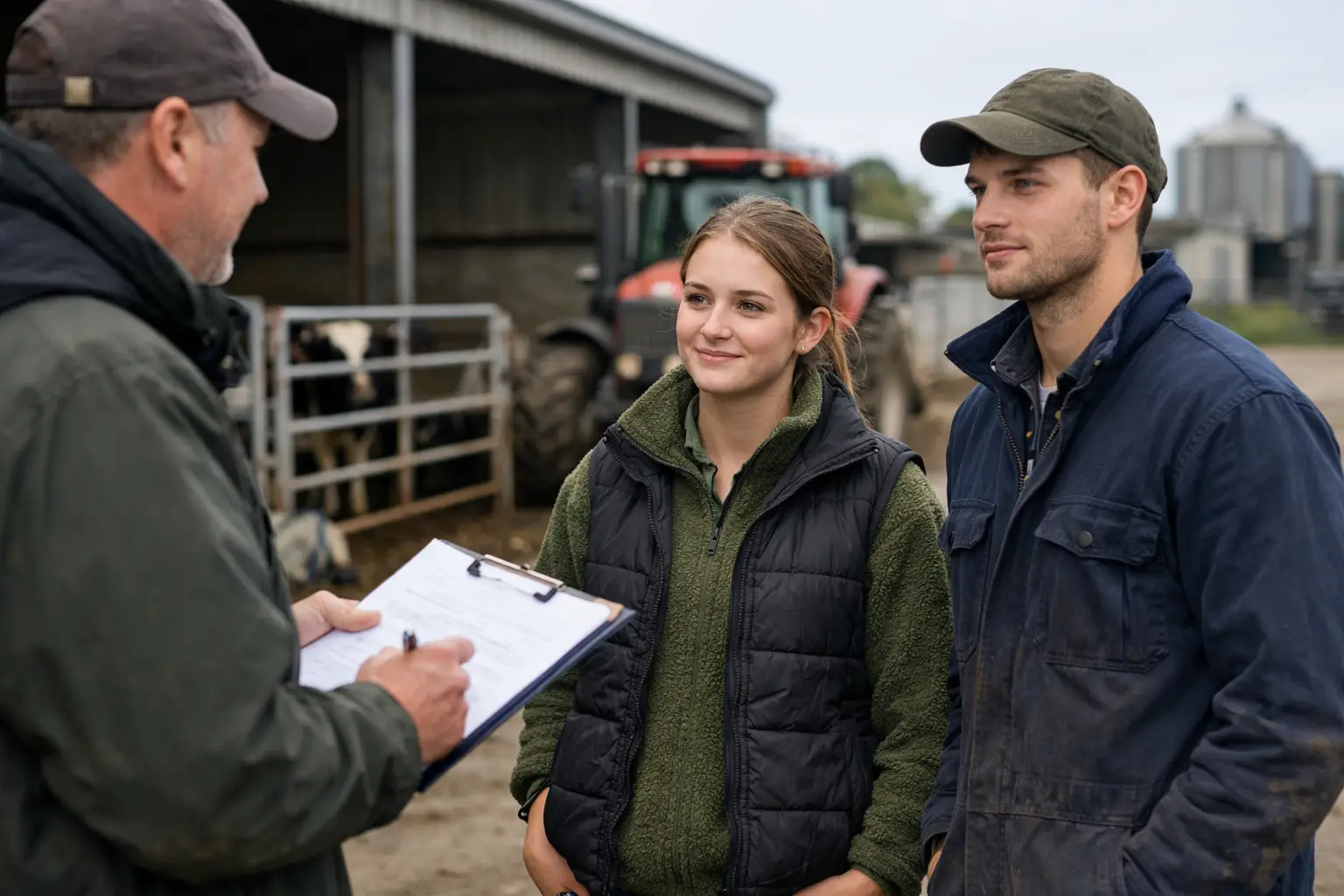
A herd manager hands in notice in the middle of calving, or a key packhouse supervisor leaves just before peak. That is usually when the question lands with a thud - how to fill farm vacancies without losing time, output and your grip on the season. In farming, an empty role is rarely just an empty role. It quickly turns into pressure on the rest of the team, delayed jobs, avoidable mistakes and, in some cases, lost margin.
If you need support beyond advertising a vacancy, explore our farm recruitment service and discuss the requirements of your appointment.
The trouble is, many agricultural businesses still hire reactively. A vacancy appears, an advert goes up, a few applications come in, and everyone hopes the right person is among them. Sometimes that works. More often, especially in dairy, livestock and fresh produce, it does not. Good people are not sat around waiting. The strongest candidates are usually already employed, selective, and wary of moving unless the role and business genuinely stack up.
How to fill farm vacancies without wasting time
If you want to fill farm vacancies well, the first step is to be honest about what the job really is. Not what it was three years ago, not what the old job description says, and not the polished version that sounds good on paper. What are the hours in practice? How much stock responsibility is involved? What kit will they be using? Who do they report to? Is this a hands-on role, a people-management role, or both?
That clarity matters because vague jobs attract vague applications. A stockperson role on a progressive beef unit is different from a general farm worker position on a mixed enterprise. A fresh produce supervisor running a fast-paced packhouse shift needs a different skill set from someone overseeing field teams and harvest planning. If the brief is blurred, you will either attract the wrong people or put off the right ones.
Pay needs the same level of realism. Farming businesses do not always have room to stretch endlessly on salary, and candidates understand that. What they will not tolerate is a package that ignores the market altogether. Accommodation, rota pattern, overtime, use of a vehicle, pension, progression and training all shape whether a role feels worthwhile. In many cases, the package is not just about basic pay. It is about the full offer and whether it reflects the demands of the job.
Why good farm candidates do not always apply
One of the biggest hiring mistakes in agriculture is assuming that a lack of applications means a lack of candidates. Often, it means the right people have not been reached, or the role has not been positioned properly.
Experienced herd managers, livestock professionals, irrigation specialists, workshop staff and produce supervisors are often passive candidates. They may not be scanning job boards every night. They are busy doing the job already. If they move, it is usually for a clear reason: a better-run operation, stronger leadership, genuine progression, improved accommodation, or a business with more stability and direction.
That means your advert alone may not do the heavy lifting. It needs to be backed by targeted outreach, sector knowledge and proper conversations with people who understand the role. This is where generic hiring methods often fall short. Agricultural recruitment is a specialist market. The language, expectations and practical realities are different from general industry hiring, and candidates can tell very quickly whether whoever is speaking to them actually understands the job.
Write the role like a farming business, not a corporate brochure
There is no point dressing a role up in glossy language if the day-to-day reality is muddy yards, early starts, machinery maintenance, staff management and pressure around timing. In fact, doing that usually backfires.
A strong farm job advert is clear, direct and grounded. It should explain what the business does, what the person will actually be responsible for, what standards matter, and what success looks like in the first six to twelve months. If housing is available, say so. If weekend work is part of the rota, say so. If experience with dairy software, livestock handling, sprayer work, audit compliance or packhouse KPIs is essential, be specific.
Candidates do not expect perfection. They expect honesty. A straightforward advert will often produce fewer applications, but better ones. That is a far better outcome than sifting through a pile of mismatched CVs.
Where to look for the right people
Hiring in farming still relies heavily on networks, reputation and word of mouth, but that is only one part of the picture. The best results usually come from using a mix of channels based on the level and type of role.
For entry-level or seasonal jobs, local networks, agricultural colleges and regional promotion can work well. For skilled permanent hires, particularly in dairy, livestock and fresh produce, a broader and more targeted search is usually needed. The more specialist the role, the less likely it is that the right person will simply appear from a standard advert.
That is why direct search often matters. If you need a proven assistant farm manager, a capable herdsperson with the right herd health background, or an operations lead who understands fresh produce throughput and team management, you often need to go out and find them rather than wait.
How to fill farm vacancies for the long term
Speed matters, but fit matters more. A quick hire who leaves after four months is expensive in ways that do not always show up neatly on a spreadsheet. There is the recruitment cost, of course, but also lost continuity, pressure on the rest of the team, and the risk of standards slipping while a role is in limbo again.
Long-term hiring in agriculture depends on three things: technical competence, reliability and cultural fit. The person needs to do the job. They also need to suit the way your business runs.
That means asking better questions at interview. Not just whether someone has used certain machinery or managed certain numbers, but how they work, how they handle pressure, what sort of management they respond to, and what they want from their next role. A family-run dairy with a close-knit team may not suit someone used to a larger corporate structure. Equally, a modern produce operation with tight reporting lines and pace may not suit someone who prefers a looser working environment.
There is no perfect formula here. It depends on the business, the role and what success looks like on your site. But if you ignore cultural fit because you are in a rush, you usually pay for it later.
Do not let the process drag on
Farm employers sometimes lose good candidates not because the role is poor, but because the hiring process is too slow or too muddled. A week passes between interviews. Accommodation details are unclear. Nobody can confirm the rota. Decision-making sits with three people who are rarely in the same place at the same time.
Strong candidates will not wait forever, particularly if they are balancing another offer or only have a small window in which moving is realistic. If you are hiring, get the basics lined up early. Know the package. Know who signs off. Know when interviews can happen. Be ready to move when you meet the right person.
A fast process does not mean a careless one. It means being organised enough to make a good decision while the candidate is still engaged.
Retention starts before day one
If you want to fill farm vacancies less often, look closely at why people leave. Some turnover is unavoidable. Farming is demanding, and people move for all sorts of reasons. But repeated churn around the same roles usually points to a problem worth fixing.
Sometimes it is pay. Sometimes housing. Sometimes poor management, unclear expectations or a role that was sold one way and turns out to be something else. In fresh produce, it might be shift pressure and lack of progression. In livestock, it may be unsociable rotas with too little support. In engineering and workshop roles, it could be outdated equipment or weak leadership.
Good retention starts with honest hiring, sensible onboarding and proper support in the first few months. New starters need structure. They need to know what is expected, who they can turn to, and how performance will be measured. If day one feels disorganised, candidates notice. If week six feels no better, they start looking elsewhere.
For many businesses, this is where specialist support makes the difference. A recruiter who knows the sector can challenge the brief, benchmark the package, reach passive candidates and assess suitability with far more precision than a broad-brush approach. That is particularly useful when the role is business-critical or the previous hiring attempts have gone nowhere. Talent Agri works in that space because agricultural recruitment is rarely just about filling a gap. It is about finding someone who can genuinely strengthen the business.
The best way to fill a farm vacancy is to treat it as a business decision, not an admin task. Get the brief right, be realistic about the market, move with purpose and hire for the way your operation actually works. Good people are out there, but they are not won over by guesswork. They move for the right role, with the right business, at the right time.
Talk to Talent Agri
Discuss your hiring needs with our agricultural recruitment team, or explore the current vacancy board if you are looking for your next role.