Herd Manager Jobs UK: What Employers Need
By Talent Agri ·
Herd manager jobs UK require more than stock skills. Learn what employers expect, what candidates should look for, and where the best fit lies.
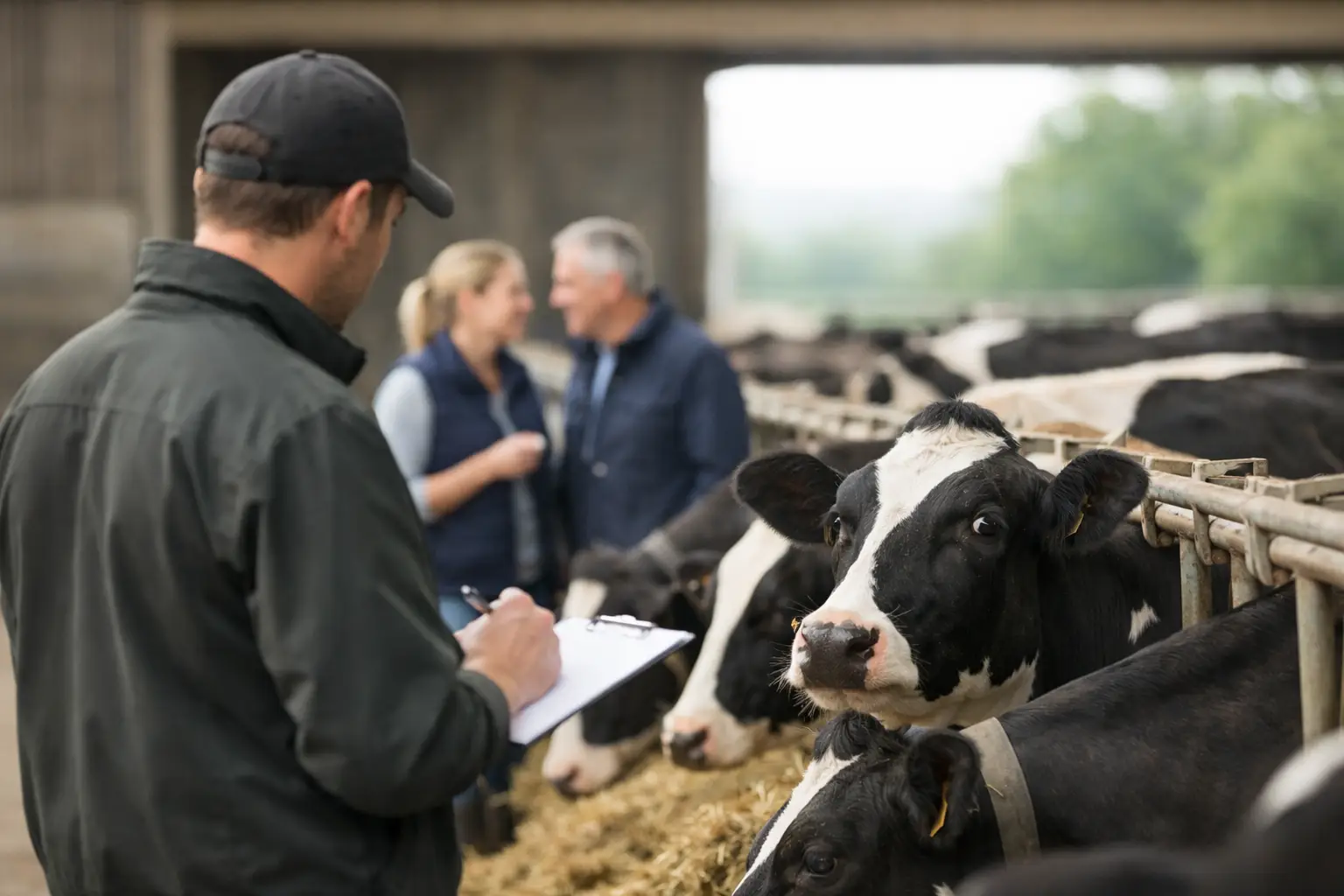
A dairy unit can have strong cows, sound facilities and solid systems on paper, yet still underperform if day-to-day herd leadership is weak. That is why herd manager jobs UK employers advertise are rarely just about filling a vacancy. They are about protecting milk quality, fertility, staff performance and the wider direction of the business.
Candidates can check the current agricultural vacancies. Employers planning a herd management appointment can discuss the brief through our dairy recruitment service.
For candidates, the same point applies in reverse. A herd manager role may look attractive on salary alone, but the real test is whether the farm is set up for success, whether expectations are realistic and whether there is room to make a proper impact. In a market where experienced livestock professionals are always in demand, the best decisions come from looking beyond the job title.
What herd manager jobs UK really involve
A herd manager sits at the operational centre of a dairy business. The role usually covers herd health oversight, fertility performance, milking routines, calving management, youngstock planning, feeding coordination and record keeping. On many farms, it also includes staff supervision, rota planning and close communication with the farm owner, unit manager, vet, nutritionist and foot trimmer.
That means this is not simply a practical stock role, even though strong hands-on ability remains essential. The most effective herd managers combine stockmanship with decision-making, consistency and commercial awareness. They notice when transition cows are slipping, when protocols are not being followed or when small routine failures are beginning to affect litres, cell count or conception rates.
The exact scope depends on the system. A block-calving unit has very different pressure points from an all-year-round herd. A high-output housed system demands a different management style from a grass-based enterprise. Some roles are heavily focused on herd performance, while others are broader and closer to assistant farm management. That is why good hiring starts with defining the real job, not relying on a generic title.
Why the right hire matters so much
In dairy, poor recruitment decisions tend to show up quickly. If a herd manager lacks attention to detail, treatment protocols can drift. If leadership is weak, milking routines become inconsistent and staff standards start to vary between shifts. If communication is poor, problems are noticed late and dealt with later still.
For employers, the cost is rarely limited to recruitment fees or the inconvenience of rehiring. It can affect mastitis rates, fertility, medicine records, staff retention and confidence across the team. On well-run units, a strong herd manager brings stability. They create repeatable standards, support junior staff and keep the herd moving in the right direction even during busy or pressured periods.
For candidates, joining the wrong business can be equally costly. A role with an unclear reporting line, outdated systems or unrealistic labour resource can quickly become frustrating. Good herd managers want to improve performance, but they also need support, trust and a workable structure around them.
What employers should look for in a herd manager
Technical livestock knowledge is the baseline, not the full picture. Most employers understandably focus first on experience with herd size, parlour or rotary systems, fertility management and calving. Those areas matter, but they are not enough on their own.
The stronger indicator is whether the candidate can translate knowledge into daily standards. Can they lead a milking team effectively? Do they keep accurate records without being chased? Are they proactive with herd health issues rather than reactive when losses build up? Can they work with advisers constructively rather than treating outside input as interference?
Character fit also matters more than many farms expect. Some businesses need a calm, steady operator who can maintain high standards in an established system. Others need someone more progressive who can challenge routines and drive change. Neither profile is better in every setting. The right choice depends on the farm's current position, management style and appetite for development.
It is also worth being honest about what the role offers. If a farm wants a herd manager with strong leadership, data discipline and proven performance gains, the package, housing arrangement and development opportunity need to reflect that. Skilled candidates know their value, particularly where they are already established in another business.
Signs a candidate is likely to perform well
Useful evidence often comes from specifics rather than broad claims. A strong candidate can usually explain the herd systems they have worked within, the targets they were measured against and the changes they helped deliver. They can talk clearly about fertility, transition management, mastitis control or youngstock performance without overstating their role.
Consistency is another good sign. Someone who has progressed steadily through dairy roles, taken on more responsibility over time and stayed long enough to make a difference often brings the level-headedness employers need. Ambition matters, but so does staying power.
What candidates should assess before accepting a role
Not every herd manager vacancy is a step forward, even if the salary looks competitive. Candidates should take time to understand how the business is run and what success in the role would actually look like after six or twelve months.
Start with the herd and the system. Ask about herd size, milk production, fertility performance, cell count trends, calving pattern and staffing structure. A farm does not need to be perfect to be a good opportunity, but there should be a clear picture of current performance and where improvement is expected.
Then look at management support. Who makes the final decisions on breeding, culling, treatments and feed? How often are performance figures reviewed? Is there a unit manager above the role, or will the herd manager report directly to the owner? Good businesses can answer these questions plainly.
Housing, working pattern and team culture also matter. A role with every-other-weekend work may be entirely reasonable, but only if staffing levels support it. A farm with investment plans may offer genuine progression, but only if there is commitment behind it. Candidates should not be afraid to ask direct questions. Serious employers will respect that.
Why some herd manager roles are harder to fill
The market for experienced dairy talent is competitive, and the most capable herd managers are rarely on the market for long. Employers often find roles difficult to fill for one of three reasons: the brief is too vague, the package is out of line with expectations, or the farm has not properly considered what kind of person will thrive there.
Location can also be a factor. Rural jobs with tied accommodation may appeal strongly to some candidates and not at all to others. The same applies to system type. A candidate with deep experience in large housed herds may not want to move into a seasonal grass-based unit, even if the salary is attractive. Skills are transferable, but preferences still matter.
This is where a precision recruitment approach makes a difference. Rather than pushing volume, it is usually far more effective to define the role carefully, present the opportunity honestly and target candidates whose experience and motivations genuinely align with the business. That tends to produce better interviews and longer-term hires.
How the best matches are made
Strong recruitment in this area is consultative by nature. Employers need more than a CV with dairy experience. They need context around capability, attitude, stability and likely fit within the team. Candidates need more than a job advert with a salary band. They need a realistic view of the business, the leadership structure and the opportunity for progression.
That balance matters because herd manager appointments affect far more than one position on an organisational chart. They influence herd performance, staff confidence and operational consistency. In practical terms, they can shape whether a dairy business spends the next two years firefighting or building on a stable foundation.
For that reason, many employers benefit from working with a specialist recruiter that understands livestock systems, seasonal pressures and the difference between a candidate who can do the job and one who will actually succeed in that specific environment. Talent Agri works in precisely that space, helping agricultural businesses secure people with the right technical grounding and the right long-term fit.
A better way to think about herd manager jobs UK
The most successful herd manager appointments are rarely about chasing the broadest shortlist or accepting the first available offer. They come from clarity, honesty and a proper understanding of what the role demands on both sides.
For employers, that means defining the job with precision and hiring for performance as well as fit. For candidates, it means choosing a business where your standards, ambitions and working style can genuinely take root. When that alignment is right, herd manager jobs UK become more than vacancies. They become the kind of appointments that strengthen a farm for years to come.
Talk to Talent Agri
Discuss your hiring needs with our agricultural recruitment team, or explore the current vacancy board if you are looking for your next role.