
A Guide to Packhouse Recruitment
By Talent Agri ·
A guide to packhouse recruitment for UK fresh produce businesses - how to hire reliable staff, reduce churn and build stronger packing teams.
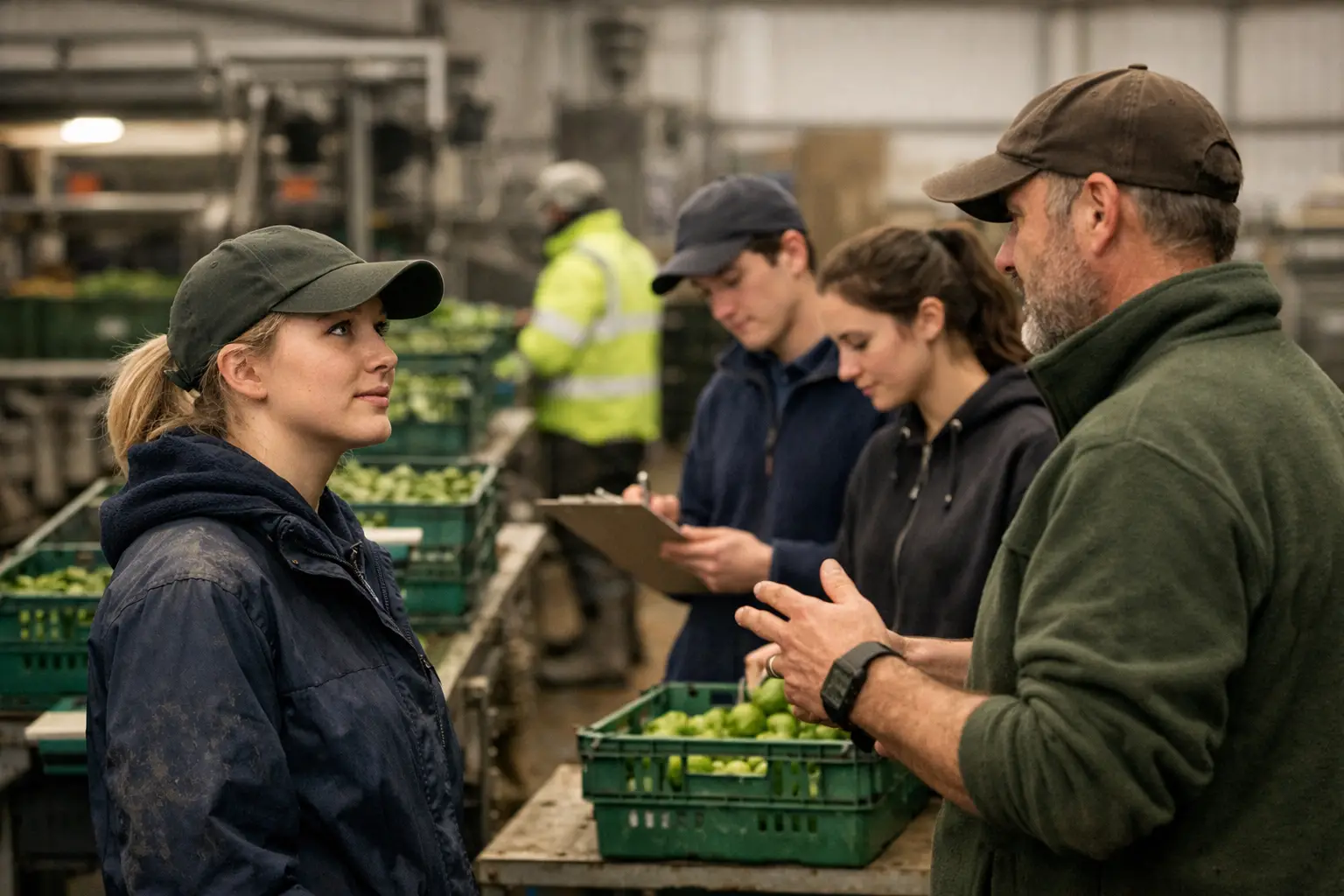
Peak season has a habit of exposing every weak point in a packhouse. One supervisor leaves, attendance slips on the late shift, output drops, and suddenly the whole site feels harder to run. That is why a proper guide to packhouse recruitment matters. In fresh produce, hiring is not just about filling gaps. It affects quality, yield, customer confidence and whether the operation can keep pace when the pressure comes on.
For a permanent packhouse appointment, discuss the shift pattern, responsibilities and experience needed through our permanent agricultural recruitment service.
Packhouses do not run well on generic recruitment. They rely on people who can handle pace, repetition, standards, hygiene rules and the reality of working around produce that does not wait. A good hire keeps lines moving and problems contained. A poor one creates knock-on issues across intake, packing, dispatch and management time.
Why packhouse recruitment needs a sector-led approach
A packhouse is not the same as a general warehouse, and treating it like one is where many hiring problems start. Fresh produce has its own rhythm. Crop volumes shift. Retail specifications tighten. Waste has to be controlled. One weak appointment in a key role can slow decision-making across an entire shift.
That is especially true when recruiting beyond basic operative level. Line leaders, QA staff, production planners, intake coordinators and packhouse managers all need a mix of practical judgement and sector understanding. They are not simply managing people or paperwork. They are making decisions that affect shelf life, customer standards, labour efficiency and margin.
The strongest hiring processes reflect that reality. They focus less on broad CV volume and more on whether a candidate has worked in similar produce environments, handled similar pressures and can fit the site culture. That matters just as much in a family-run fruit business as it does in a larger multi-site operation.
A practical guide to packhouse recruitment planning
Recruitment usually goes wrong before the advert is even written. Many businesses start hiring only when the pressure is already on, which leaves little room to assess properly. If you are reacting to a resignation on a Thursday and need cover by Monday, you are far more likely to compromise.
The better approach is to look at recruitment as part of operational planning. That means understanding where your recurring gaps are, which roles are hardest to replace and where staff turnover is costing more than the wage line suggests. In packhouses, the pinch points are often predictable. Peak periods, holiday cover, weekend shifts and roles that sit between shop floor and management tend to be the hardest to stabilise.
A realistic hiring plan should start with the actual demands of the role. Is this a physically demanding operative position where reliability is the key issue? Is it a technical QA role where audit knowledge and attention to detail matter more? Or is it a management role where labour planning, retailer exposure and team leadership all sit together? If the brief is vague, the shortlist usually will be too.
Get clear on what the role really involves
Job titles in fresh produce can be misleading. One packhouse supervisor role may involve little more than labour allocation and reporting. Another may require direct customer communication, KPI ownership and responsibility for compliance on shift. If those details are not clear from the outset, candidates either self-select out or arrive with the wrong expectations.
Good briefs are plain and specific. They set out the shift pattern, seasonality, reporting lines, produce type, team size and where the pressure points sit. They also need to be honest about the environment. If the role involves long days in peak, chilled conditions, or frequent weekend work, say so. Overselling a role to secure acceptance nearly always leads to churn.
Know what can be trained and what cannot
Some skills can be taught on site. Attitude, consistency and pace are harder to install after the fact. That is one of the key trade-offs in packhouse recruitment. If you hold out for somebody who has done the identical job in the identical crop, you may narrow the field too far. But if you recruit purely on availability, you may spend months managing problems that should have been screened out.
It often makes sense to separate essentials from nice-to-haves. Experience in fresh produce is valuable, but so is proven shift reliability, confidence with team leadership, and the ability to work within process. For more senior hires, commercial awareness and calm decision-making under pressure can matter more than a perfect title match.
Where packhouse hiring often falls short
One common issue is chasing volume over suitability. A pile of CVs looks productive, but it does not help if most applicants have no relevant background, no interest in the shift pattern or no realistic route to site. Packhouses are often in rural areas, and travel is still a major factor. A candidate who says the commute is fine in an interview may think differently after two weeks of early starts.
Another problem is speed without structure. Fast hiring is sometimes necessary, especially in season, but there still needs to be a process. That means checking work history properly, testing whether the candidate understands the role, and exploring why they are moving. In packhouse settings, short tenure can be a red flag, but not always. Sometimes it reflects poor site management rather than candidate quality. That is where sector knowledge matters.
There is also the issue of cultural fit, which can sound soft until you see the cost of getting it wrong. In many fresh produce businesses, teams are close-knit and practical. A manager who looks strong on paper but cannot earn respect on the floor will struggle quickly. Equally, a candidate may have good technical knowledge but not suit a business that expects a hands-on approach.
How to attract better packhouse candidates
The strongest candidates are rarely persuaded by vague promises. They want to know what the business is like to work for, how the operation is run and whether there is stability behind the role. For operatives and supervisors, that often means clear information on hours, pay structure, overtime and training. For managers, it means understanding who they report to, how much autonomy they will have and what shape the site is in.
Clarity does more than improve applications. It filters out poor-fit interest early. If a role requires six-day weeks in peak, there is no point dressing it up as something softer. The right person will respect the honesty. The wrong person will drop out before wasting everyone’s time.
This is also where specialist recruitment support can make a real difference. Businesses that use a sector-led recruiter are not just buying reach. They are gaining access to candidates who already understand fresh produce, are open to the right move, and have been screened with the realities of the role in mind. For employers who need precision rather than noise, that saves time and avoids expensive mis-hires.
Interviewing for the realities of the job
A good interview for packhouse recruitment should test practical fit, not just confidence in a meeting room. Candidates need space to talk through how they have handled pressure, staffing issues, quality concerns and shifting volumes. A polished answer is less useful than a grounded one.
For operative-level roles, reliability and attitude often tell you more than rehearsed responses. For supervisory and management roles, ask about real scenarios. How did they deal with line downtime? What happened when labour numbers dropped unexpectedly? How have they balanced output against product quality? You are looking for judgement, ownership and realism.
It also helps to show candidates the role properly. A site tour, where possible, gives a far better sense of fit than a tidy job description. Some people warm to the environment straight away. Others realise it is not for them, which is far better before an offer than after induction.
Retention starts during recruitment
Hiring well is only half the job. Packhouses that recruit successfully but lose people quickly usually have a mismatch between promise and reality. If the role, training, management style or progression route was not explained properly at the start, frustration builds fast.
Retention improves when recruitment and onboarding line up. New starters should know what good performance looks like, who they go to for support, and how the business measures success. That applies whether you are hiring seasonal operatives or a permanent packhouse manager.
It is also worth paying attention to why people leave. If turnover keeps hitting the same shift, manager or department, recruitment may not be the root cause. Throwing more hiring at an internal problem only masks it for a while.
Guide to packhouse recruitment for long-term stability
The best guide to packhouse recruitment is not really about adverts or interview questions on their own. It is about building a hiring process that reflects how fresh produce businesses actually work. That means planning ahead, being honest about the job, screening for sector fit and treating retention as part of recruitment rather than a separate issue.
For some businesses, the answer is improving internal processes. For others, it is working with a specialist who understands produce, labour pressures and the difference between a candidate who can do the job and one who can last in it. Talent Agri takes that precision-led view because in packhouse hiring, close enough is rarely good enough.
If your packhouse recruitment keeps feeling harder than it should, that is usually a sign to tighten the process rather than lower the bar.
Talk to Talent Agri
Discuss your hiring needs with our agricultural recruitment team, or explore the current vacancy board if you are looking for your next role.