How to Choose a Farm Recruitment Agency
By Talent Agri ·
Choosing a farm recruitment agency UK businesses can trust means finding sector expertise, compliance, and candidates who fit for the long term.
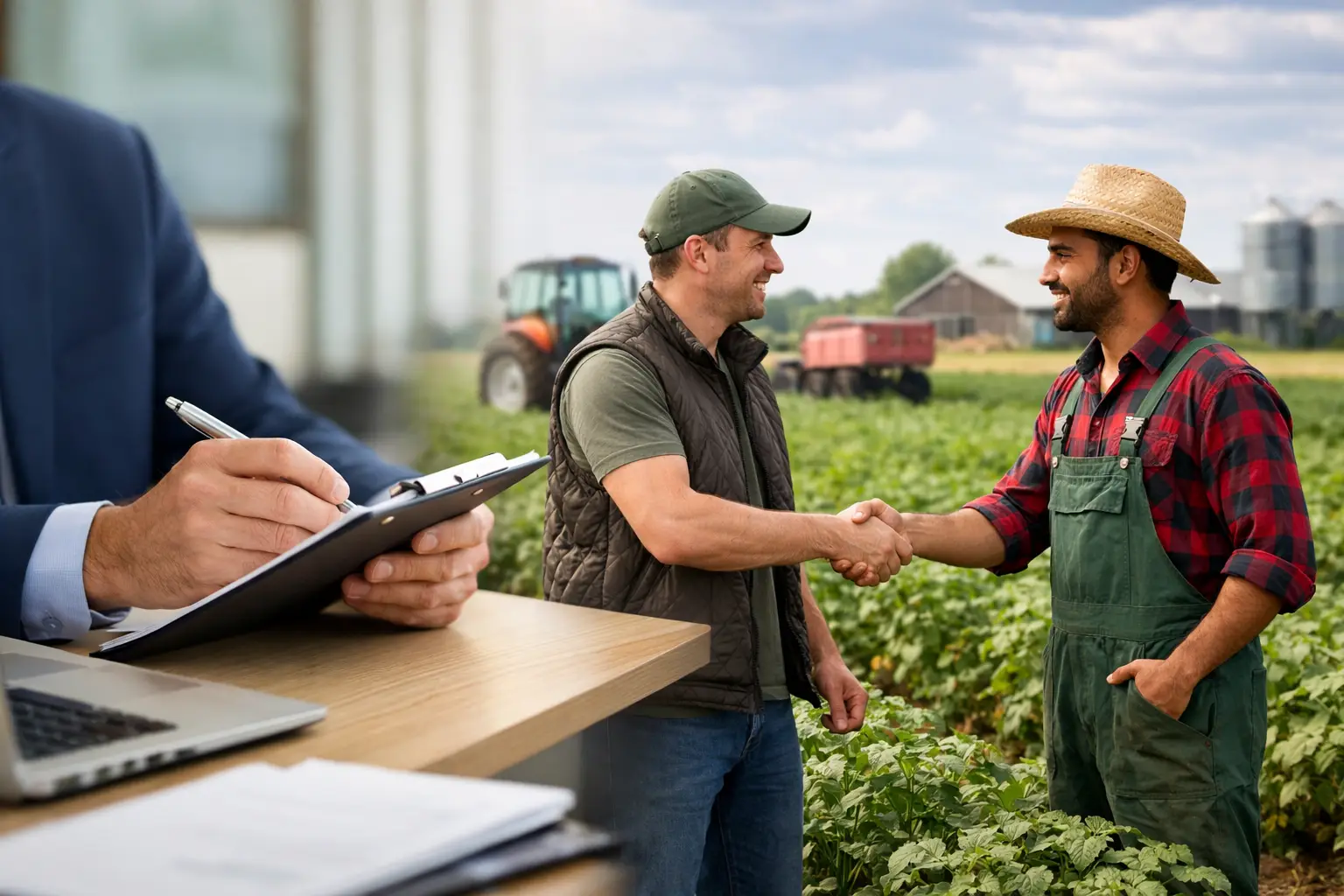
A missed hire in agriculture rarely stays a people problem for long. It becomes a production problem, a welfare problem, a timing problem, and very quickly a profit problem. That is why choosing the right farm recruitment agency UK employers can rely on is not simply about filling vacancies. It is about protecting output, standards, and long-term business performance.
As you compare agencies, review the scope of our permanent farm recruitment service and bring your role requirements to an initial conversation.
For dairy units, livestock enterprises, fresh produce growers, and packhouse operations, recruitment sits much closer to commercial results than it does in many other sectors. The right herd manager can lift consistency. The right farm supervisor can steady a team during peak pressure. The right irrigation specialist or packhouse manager can make the difference between a smooth season and one that slips behind. In practical terms, recruitment quality matters because operational margins are tight and there is little room for underperformance.
What a farm recruitment agency UK employers actually need
A specialist agency should do more than send CVs. In agriculture, that standard is too low. Employers need a recruitment partner that understands the role itself, the working environment, and the pressures around it. A generic recruiter may be able to identify transferable skills, but that is not the same as recognising whether a candidate can work effectively within a dairy system, manage stock to expected standards, or handle the pace and precision of a fresh produce operation.
That distinction matters because farming businesses are rarely hiring in ideal conditions. Vacancies often arise during busy periods, after a sudden departure, or when expansion has outpaced the existing team. In those moments, speed matters, but speed without judgement creates more work later. A dependable agency balances urgency with precision recruitment, making sure the shortlist is relevant, vetted, and realistic.
The best agencies also understand that many agricultural hires are not just role matches. They are environment matches. A technically capable candidate may still struggle if the scale of the business, management style, accommodation arrangements, or seasonal demands are not right. Long-term fit is not a soft extra. It is central to retention.
Why sector specialism matters in farm recruitment
Agriculture has its own language, rhythms, and operational pressures. Recruitment works better when the person managing the search understands those realities from the outset.
A specialist farm recruitment agency UK businesses work with should recognise the difference between hiring for a progressive dairy herd, a beef finishing enterprise, a top fruit business, or a soft fruit operation with complex labour demands. Each requires different experience, different personalities, and different expectations around working patterns and performance.
In dairy, for example, employers may need people with proven herd health knowledge, milking routine discipline, youngstock experience, and confidence with data-led systems. In fresh produce, the emphasis may shift towards people management, harvest planning, quality control, irrigation oversight, or packhouse efficiency. In livestock and field-based roles, practical competence, stock sense, machinery familiarity, and reliability can be just as important as formal qualifications.
A recruiter who knows the sector can ask better questions, challenge weak applications, and present stronger matches. That benefits employers directly, but it also helps candidates. Skilled professionals want to speak to someone who understands their background and can position them properly, not reduce years of agricultural experience to generic keywords.
The signs of a strong agricultural recruitment partner
If you are selecting an agency, look first at relevance rather than reach. A large database sounds impressive, but volume is not the same as quality. In specialist markets, targeted networks and market knowledge usually carry more value than broad candidate numbers.
A strong agency will invest time in understanding the vacancy properly. That means discussing reporting lines, working hours, peak periods, technical expectations, management style, and what success in the role should look like after six or twelve months. If that conversation feels rushed, the search is likely to be rushed too.
You should also expect clear standards around vetting and compliance. In agriculture, where businesses may be operating under tight welfare, food safety, and operational requirements, recruitment mistakes can be costly. Right-to-work checks, reference validation, role suitability, and honest communication should be standard, not optional.
It is also worth paying attention to how an agency manages expectations. Good recruiters do not promise an endless stream of perfect candidates. They explain the market as it is, advise on salary positioning, and highlight where flexibility may improve outcomes. That level of honesty is usually a sign of a trusted partner rather than a transactional supplier.
For employers, the real value goes beyond filling the vacancy
A well-run recruitment process saves time, but the more important gain is better decision-making. Employers who work with a specialist agency are not just outsourcing advertising. They are gaining market insight, candidate screening, and support in identifying the person most likely to perform and stay.
This is particularly valuable in sectors where downtime is expensive. A poor hire in a herd management role can affect productivity and team morale. A weak appointment in a packhouse can disrupt throughput and quality. An underqualified operative in a technical production role can create problems that are only noticed once standards start to slip.
By contrast, a precise search helps reduce those risks. It narrows the field to candidates with proven sector relevance, realistic motivation, and the capability to step into the demands of the role. For many employers, that makes retained search or targeted recruitment support especially effective for senior, business-critical, or hard-to-fill positions.
The strongest outcomes also tend to come from agencies that take a relationship-led approach. Recruitment works better when the recruiter understands the business over time, not just at vacancy stage. That wider view helps with succession planning, salary benchmarking, and identifying the kind of talent that grows success over the longer term.
For candidates, a farm recruitment agency UK specialists trust can open the right doors
For candidates already working in agriculture, changing roles is rarely just about securing the next available position. It is often about finding a better-managed business, stronger progression, improved stability, or a role that fits a specific area of expertise.
That is where specialist support matters. A recruiter with agricultural knowledge can help candidates assess whether an opportunity is genuinely suitable. They can advise on how a role compares with current market expectations, whether a move offers real development, and how to present hands-on experience in a way that resonates with employers.
This is especially useful for experienced professionals whose strengths may not always be obvious on paper. A stockperson with excellent practical judgement, a herd manager with strong team leadership, or a fresh produce supervisor with deep operational knowledge may all need a recruiter who can communicate those strengths properly.
A good agency also brings discretion. In close-knit sectors, confidentiality matters. Many candidates are open to the right move but do not want a broad, visible job search. A specialist recruiter can manage that process carefully and professionally.
Questions worth asking before you choose
Whether you are hiring or considering your next role, a few practical questions can quickly show whether an agency is the right fit. Ask which agricultural sectors they recruit within most often. Ask how they assess suitability beyond the CV. Ask how they handle compliance, references, and candidate briefing. For employers, ask what their process looks like when a role is urgent or difficult to fill. For candidates, ask how they support career progression rather than just placement.
The answers should feel informed and specific. If the response is generic, the service probably is too.
A specialist business such as Talent Agri is built around that precision-led model - understanding the sector properly, shortlisting with care, and focusing on placements that work in practice, not just on paper.
Choosing quality over volume
There will always be agencies that compete on speed alone. Sometimes a quick shortlist can be helpful, particularly for straightforward roles with an active local talent pool. But where technical ability, reliability, and cultural fit are central, quality-first recruitment is usually the better commercial decision.
That does not mean slow recruitment. It means disciplined recruitment. The process should be efficient, but also thorough enough to avoid avoidable mistakes. In agriculture, where the cost of the wrong hire can be felt quickly across operations, that balance matters.
The right agency will understand that recruitment is not about filling space in a rota. It is about placing capable people into businesses where they can contribute from day one and continue adding value over time.
If you are choosing a farm recruitment partner, look for one that understands the work behind the vacancy, the pressure behind the deadline, and the standards behind the hire. That is usually where better appointments begin.
Talk to Talent Agri
Discuss your hiring needs with our agricultural recruitment team, or explore the current vacancy board if you are looking for your next role.