Beef Farm Jobs UK: What Employers Need
By Talent Agri ·
Beef farm jobs UK demand practical skill, reliability and fit. Learn what employers need, what candidates should expect, and where value is built.
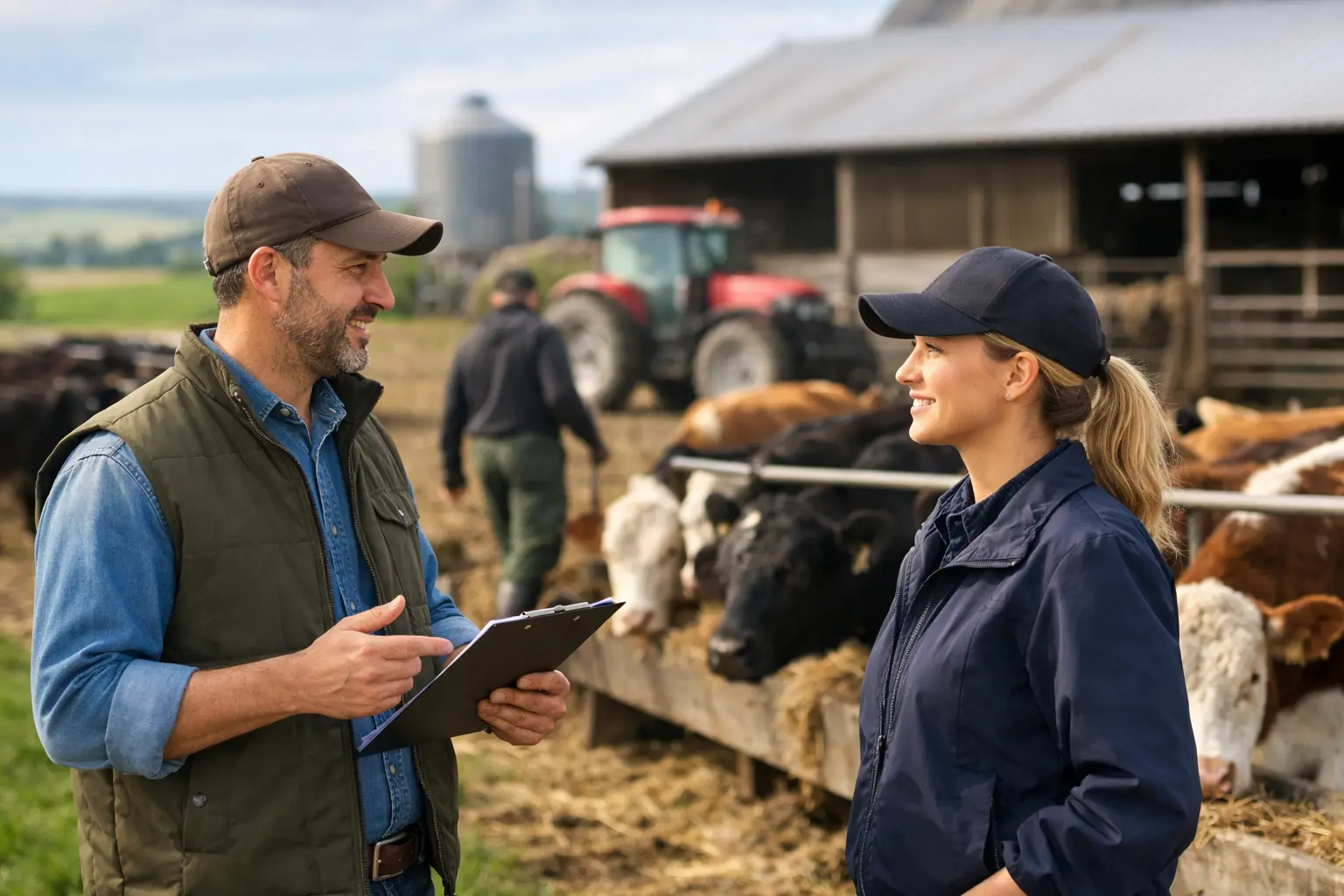
Finding the right people for beef farm jobs UK is rarely a numbers game. A CV can show time served, but it does not always show stock sense, consistency, or whether someone will settle into the pace and standards of a working livestock business. For employers, that gap is costly. For candidates, it can mean stepping into a role that looks right on paper but does not suit the system, team, or long-term opportunity.
Check our current agricultural vacancies if you are looking for work. Employers can discuss a long-term staffing brief through our permanent recruitment service.
That is why recruitment in beef farming needs to be precise. Whether the role is hands-on stock work, farm supervision, machinery operation, or a mixed position covering livestock and general farm duties, the strongest hires are usually those matched on capability and fit, not just availability.
Why beef farm jobs UK are not one-size-fits-all
Beef enterprises across the UK vary far more than job titles suggest. A finishing unit in the Midlands, a suckler herd in Scotland, and a mixed arable-livestock business in the South West may all advertise for a stockperson or farm worker, yet the day-to-day demands can be quite different.
Some farms need someone confident with feeding systems, bedding routines, and cattle movement in higher-volume setups. Others need broader practical ability - fencing, tractor work, telehandler operation, yard management, and seasonal support across the wider business. On pedigree or breeding-focused units, attention to detail around calving, health monitoring, recording, and animal presentation matters more.
For employers, this means a generic job advert often misses the mark. For candidates, it means asking better questions before applying. What type of beef system is in place? How much autonomy does the role carry? Is the business looking for a safe pair of hands to keep standards steady, or someone ready to improve systems and take on responsibility?
What employers really need from candidates
In beef recruitment, technical skill matters, but reliability often decides whether a hire succeeds. A candidate may have experience with cattle, yet still struggle if they are not organised, calm under pressure, or able to work consistently through routine tasks.
Most employers are looking for a mix of practical competence and sound judgement. That usually includes confidence handling livestock, awareness of animal welfare standards, basic machinery or telehandler ability where relevant, and a willingness to get involved across the farm rather than sticking rigidly to one task.
Equally important is attitude. Beef units often operate with lean teams, especially on family-run farms or smaller commercial sites. When headcount is tight, every person affects output, standards, and morale. Someone who communicates well, turns up reliably, and takes ownership of the role adds value quickly. Someone who needs constant supervision, avoids less attractive jobs, or disrupts established routines can create pressure just as quickly.
This is where precision recruitment makes a difference. Employers do not only need a candidate who can do the job. They need one who can do it in their environment, with their livestock system, and within the working culture of the business.
What candidates should expect from beef farm jobs UK
For candidates, beef farm roles can offer strong long-term prospects, but expectations need to be realistic. These are practical jobs built around livestock needs, weather, seasonal workload, and the commercial realities of farming. Early starts, weekend work, and physically demanding routines are common. That will suit some people well and put others off.
The positive side is that good businesses increasingly understand the value of retention. Well-run farms know that experienced livestock staff are difficult to replace. As a result, the better opportunities tend to offer clearer progression, improved accommodation where included, investment in equipment, and more structured responsibilities.
Candidates should look closely at what progression really means in each role. On one farm, it may mean moving from general stock work into herd or unit responsibility. On another, it may mean broadening into machinery, team leadership, or operational planning. Career growth in beef farming is not always tied to formal titles, but it should still be visible in the scope of the role, the support offered, and the trust given.
The skills that make candidates stand out
Experience with cattle remains central, but it is often the surrounding skills that separate stronger applicants from the rest. Employers notice candidates who understand safe handling, can maintain consistent routines, and recognise when livestock behaviour or condition has changed.
Machinery competence also carries weight, particularly where roles combine stock work with feeding, mucking out, bedding, trailer work, or general farm maintenance. Tickets and certificates can help, but practical confidence matters more than a long list of paper qualifications that are not backed by current ability.
Record keeping is another area that is gaining importance. On many farms, even hands-on positions now involve some level of data awareness, medicine records, movement compliance, or feeding and performance tracking. Candidates who are comfortable with this side of the role can be especially valuable.
Then there is the less visible skill set - judgement, stockmanship, and work ethic. These are harder to assess from a CV, which is why interviews and sector-specific screening matter. A candidate who understands cattle but also understands responsibility will always carry more weight than one who simply lists tasks completed in previous roles.
Hiring challenges in the current market
The market for skilled livestock labour is tight. Employers looking to fill beef farm jobs UK are competing for a relatively limited pool of candidates with the right experience, location flexibility, and long-term commitment to the sector.
That creates a few common problems. Some businesses move too slowly and lose strong applicants. Others write vague role briefs and attract the wrong level of candidate. In some cases, salary and package expectations have not kept pace with the scarcity of experienced staff, particularly where the role includes significant responsibility or unsociable working patterns.
There is also the question of compromise. If a farm cannot find the complete package, should it hire for attitude and train technical gaps, or hold out for direct experience? The answer depends on the business. A highly specialised operation with limited supervision may need someone proven from day one. A farm with stronger structure and support may get better long-term value by backing the right person with the right mindset.
How to improve the quality of applications
For employers, the fastest way to improve candidate quality is to be specific. Clear job information attracts better-fit applicants and discourages speculative ones. That means setting out the livestock system, daily responsibilities, machinery expectations, working hours, accommodation details if relevant, and the level of responsibility attached to the role.
It also helps to be honest about the less attractive parts of the job. If the role includes regular weekend cover, lone working, or a broad mix of duties beyond cattle work, that should be stated early. Serious candidates appreciate clarity. It saves time on both sides and improves retention after placement.
The recruitment process itself matters too. Good candidates are often already employed, so communication needs to be timely and professional. Delays, unclear feedback, or poorly handled interviews can weaken employer reputation in a small sector where word travels quickly.
This is one reason specialist support can be valuable. A recruiter with genuine agricultural knowledge can test experience properly, challenge assumptions, and present candidates who make sense for the system rather than simply filling a shortlist. For businesses hiring in a competitive market, that targeted approach is often far more effective than broad advertising alone.
Why fit matters as much as experience
A technically capable candidate can still be the wrong hire. In beef farming, working style, communication, and expectations around responsibility often determine whether someone stays and performs well.
A candidate moving from a larger, structured enterprise may not enjoy the independence and variety of a smaller family-run farm. Equally, someone used to broad mixed-farm work may find a more intensive cattle-only system repetitive or restrictive. Neither is necessarily a poor worker. The issue is fit.
That is why both employers and candidates benefit from a more consultative process. Employers need a realistic view of what will suit their business beyond the immediate task list. Candidates need enough detail to judge whether the role supports the sort of working life and progression they want.
At Talent Agri, that principle sits at the centre of good recruitment - finding talent that grows success means looking beyond the vacancy and focusing on the long-term match.
Building stronger careers and better teams
Beef farming remains a sector where practical skill, dependability, and good judgement carry real value. The challenge is not simply finding people who want to work in agriculture. It is finding people who can contribute consistently in the right setting, and roles that give capable individuals a reason to stay.
For employers, better hiring starts with clarity, realistic expectations, and a focus on fit. For candidates, better career moves come from understanding the business behind the vacancy, not just the job title. When both sides get that right, beef farm recruitment becomes less reactive and far more productive.
The strongest placements in this sector are rarely rushed. They come from understanding the farm, the person, and the standards needed for both to succeed.
Talk to Talent Agri
Discuss your hiring needs with our agricultural recruitment team, or explore the current vacancy board if you are looking for your next role.